Nazrin Aliyeva’s journey to her Ph.D. in Environmental Planning and Design at UGA’s College of Environment + Design (CED) spans continents and disciplines. Originally from Azerbaijan, Aliyeva initially aspired to be an architect before earning her bachelor’s degree in urban planning from Istanbul Technical University. Her passion for creative design blossomed during an undergraduate urban design project, leading her to pursue graduate studies at CED. Upon discovering landscape architecture and the American Society of Landscape Architects (ASLA), she found her professional home. “Then when I saw ASLA, when I saw all of these people, what a big community the landscape architecture has. I was like yeah, I think that’s more aligned to what I want to do,” Aliyeva recalled.
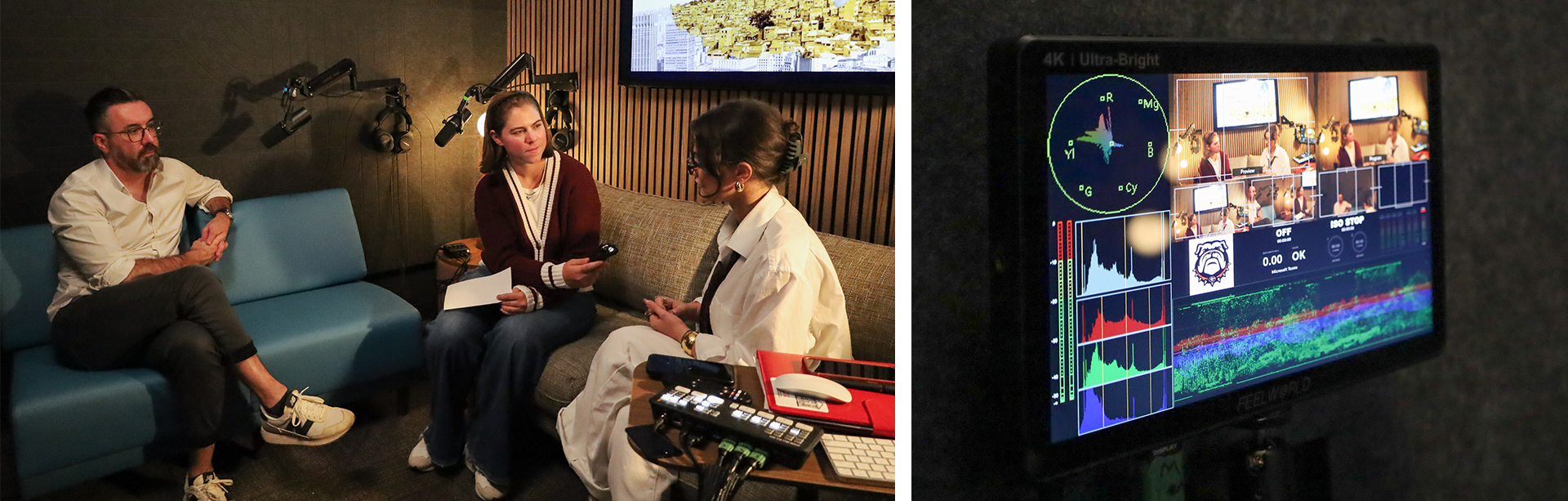
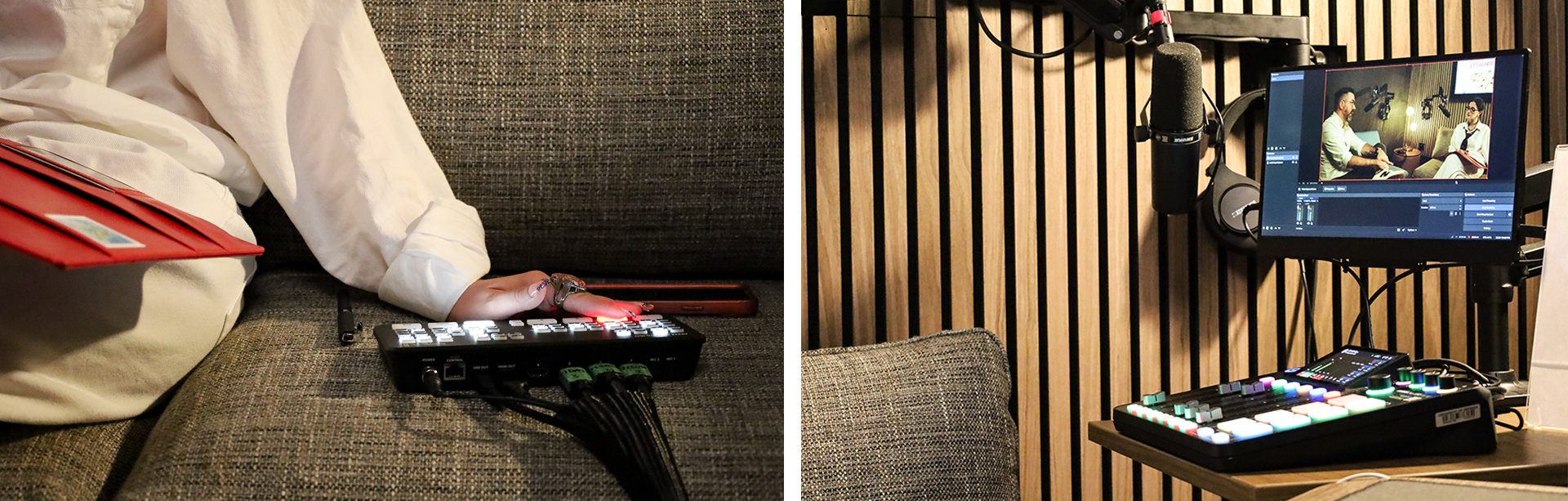
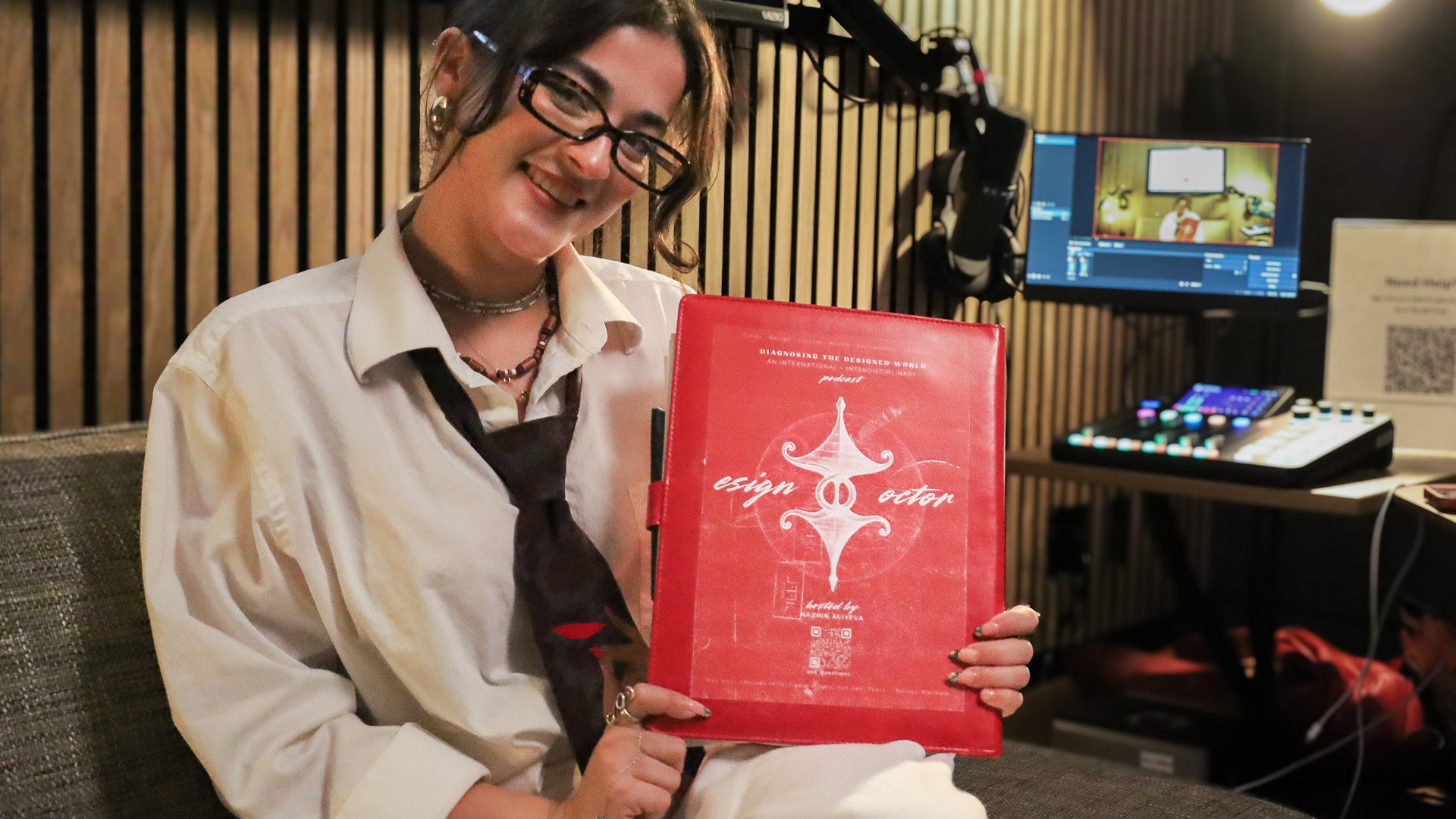
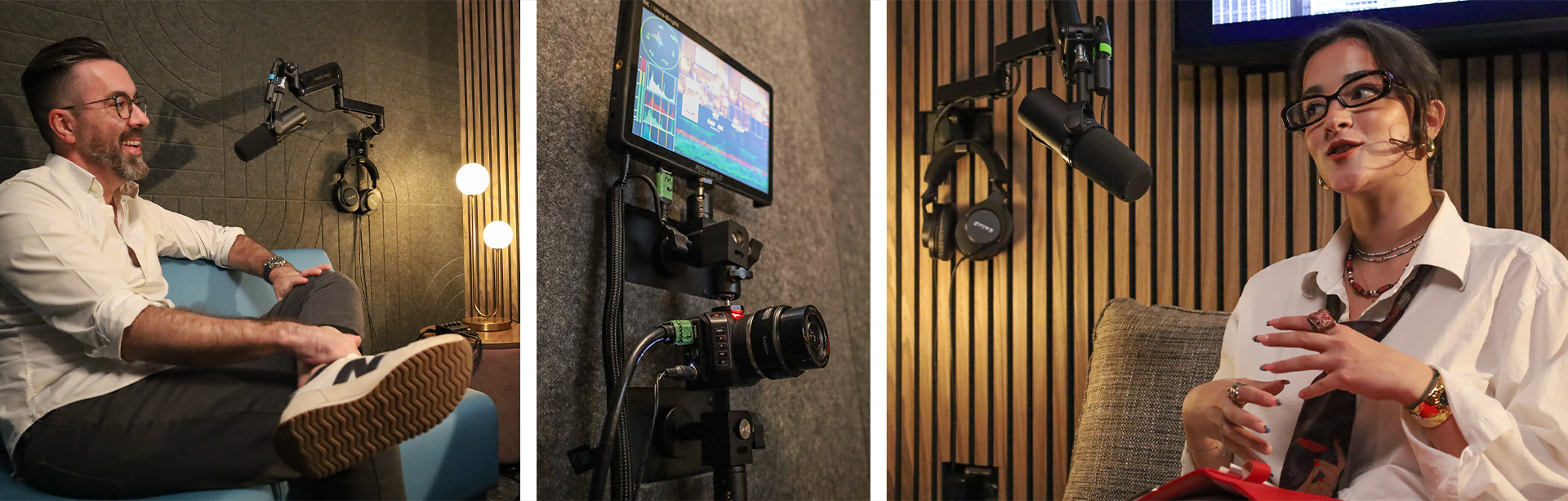
This multi-faceted academic background inspired The Design Doctor Podcast, recorded in the new Creative Engagement Wing Podcast Studio at UGA’s Miller Learning Center. Created to demystify how built environments are shaped, the show clarifies the distinct roles of architects, urban planners, and landscape architects for the public. The podcast’s name draws from advice given by an ITU professor: “Why are you saying that you’re an urban planner or landscape architect? Why it matters? You’re a designer.” Combining this unified designer identity with “Doctor”—a nod to her doctoral journey—gave Aliyeva the ideal platform to foster dialogue.
A core mission of the podcast is breaking down academic jargon. Aliyeva strives to build an “amalgamated language” that unifies how different fields describe spatial concepts. During interviews, she intentionally approaches topics without assumptions, allowing guests to explain complex theories fully while asking clarifying follow-up questions to ensure accessibility for listeners.
Having navigated both urban planning and landscape architecture, Aliyeva frequently addresses the professional friction between the two fields. “We’re just doing the same thing in a different scale,” she explained, advocating for collaboration over disciplinary silos.
A central theme of Aliyeva’s philosophy is balancing professional expertise with genuine community empathy. In her third podcast episode, titled “Place Attachment,” Aliyeva sat down with College of Environment and Design lecturer Ryan Wright to examine how individuals connect with urban environments. During their conversation on sense of place, Wright shared a poignant case study regarding a bridge scheduled for removal. Although planners viewed the structure’s removal as a logical design intervention, fieldwork revealed that removing the bridge failed to address the community’s primary concerns and actual needs.
To prevent top-down design decisions, Aliyeva advocates for deep fieldwork and structured engagement methods like the Nominal Group Technique—a silent voting process that ensures every resident’s voice is weighted equally. “Sometimes you can be part of the community too, and just putting yourself in their shoes,” she noted, emphasizing that practitioners must remain humble and listen.
Beyond podcasting, Aliyeva serves as a lab assistant guiding the rebranding of CED’s Redlab, which researches virtual reality and artificial intelligence applications in landscape architecture to enhance mental health and transportation design. Looking forward, she aims to expand the show’s cross-cultural reach by interviewing international guests, interested in discussing the concept of “home”. Through every conversation, Aliyeva continues to connect professions, demystify design, and amplify community voices.
Listen to The Design Doctor Podcast on YouTube!