


MLA student Megan Janssen, BLA ‘24, wants to know how landscape architects find their way to the profession, starting with College of Environment and Design students. One of few to research this subject area, Janssen was invited to publish her ongoing research on ASLA’s professional blog, the Field.
From her first semester at UGA in 2020, Master of Landscape Architecture student Megan Janssen, BLA ‘24, noticed something about her undergraduate cohort. While she entered college as a landscape architecture major, many of her peers did not.
“Most people that came into the program were either at least two or three years already into school,” said Janssen. “Maybe freshly starting, if they were lucky and found out about [landscape architecture] some other way through parents or close friends or family.”
Janssen discovered the field in high school, after taking architecture classes offered by her school. While she didn’t love the physics component of architecture, she loved the creative side of it. A Google search of similar fields opened the door to landscape architecture, including the College of Environment and Design’s Bachelor of Landscape Architecture program.
“I toured this program here at UGA in my junior year [of high school], and I knew that I wanted to come to UGA,” said Janssen. “But then once I got here, I realized pretty quickly how many transfer students we have. And my first question to everyone was, ‘How did you guys find landscape architecture?’”
When it came time for Janssen to select a topic for her master’s thesis, she found an opportunity to dig into this question: What if more students knew about landscape architecture sooner?
According to a 2022 Niche data dive for majors and programs, just 0.05% of high school seniors planned to major in landscape architecture. In comparison, for every one student enrolling in landscape architecture, there were about 28 enrolling in architecture programs.
“I’ve always wanted to educate more [high school] students especially about this field, because it does feel like that’s the most pressing age group that needs to know for a college major,” said Janssen. “That’s the time of your life when you’re deciding, ‘Hey, am I interested in this or am I not interested in this?’”
Janssen divided her thesis research into two parts: surveying current landscape architecture college students and educating potential high school students on the discipline.
In her initial survey of landscape architecture undergraduate students, most respondents described finding the field later in their academic career. With each story recorded, Janssen prepared her materials for the bulk of her project: educational outreach.
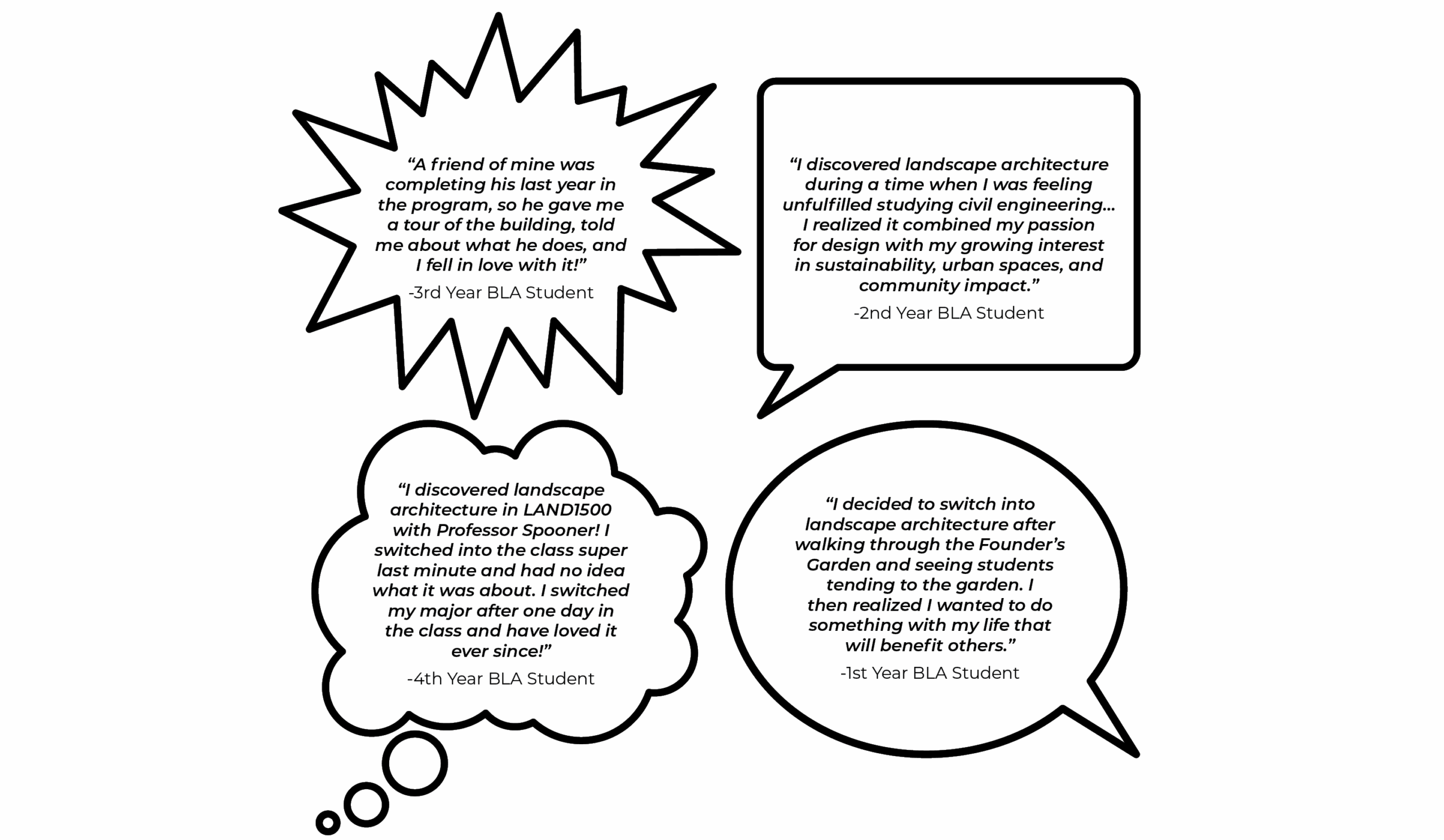
Selected responses from Janssen’s survey of CED students when prompted “How did you discover landscape architecture?” / Megan Janssen
In her background research, Janssen found a noticeable lack of data on impact of outreach to high schoolers from landscape architecture organizations with education initiatives, such as Future Landscape Architects of America and ASLA Career Discovery and Diversity. Most of the materials developed by these organizations were for K-8th students, and while there were some materials for K-12 students, the organizations did not have systems in place to track high school students’ career discovery or interest in landscape architecture following graduation.
So, Janssen adapted her own materials and did her own outreach. In August, Janssen partnered with a Georgia high school to introduce landscape architecture to around 200 students already enrolled in architecture and drafting classes.
Over the course of a few class visits, Janssen tested the effectiveness of three different engagement formats: a presentation-only model; the presentation paired with a pocket park activity, adapted from classroom-tested resources developed by landscape architects and educators; and the presentation paired with a Minecraft design challenge, inspired by ASLA’s DREAM BIG with Design Minecraft Competition.
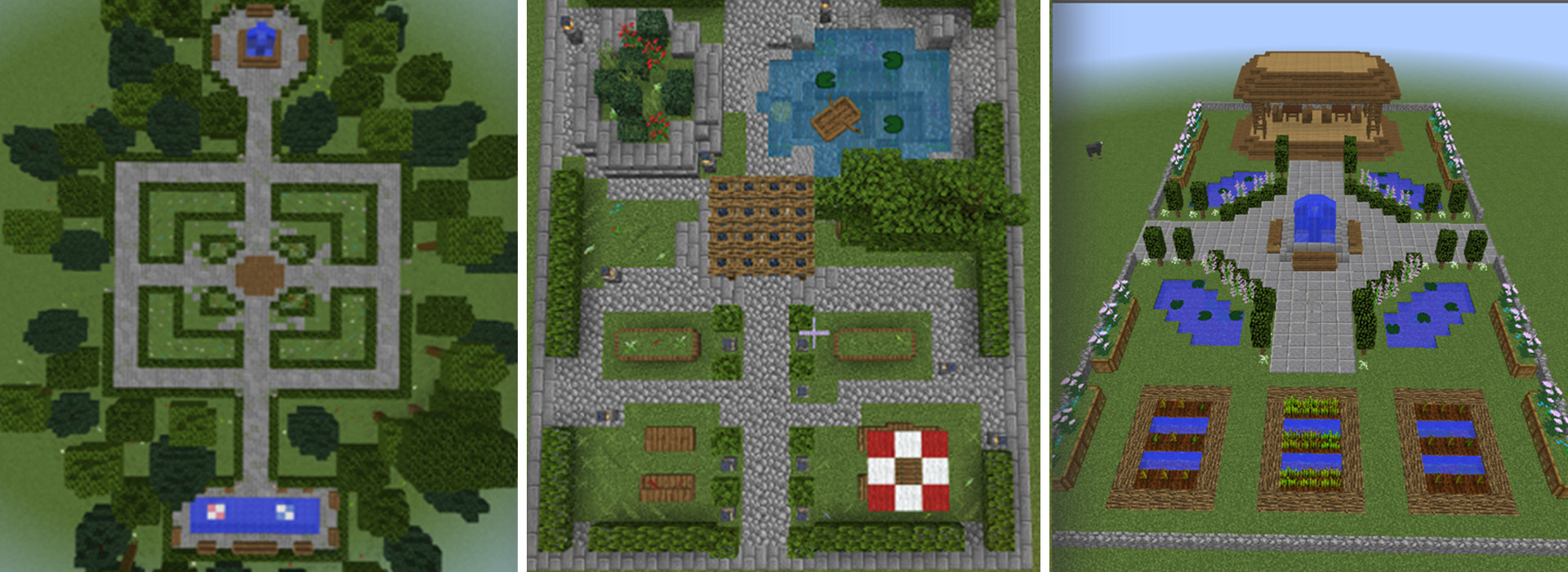
Examples of students’ Minecraft design challenge. Students were instructed to create a park in Minecraft that could be a space for community gatherings, incorporate a balance of paved areas and plant materials and water features.
During the presentation, Janssen explained what a landscape architect is and her own journey to the profession. She also presented the different career paths landscape architecture majors can take, emphasizing that it is a STEM profession with broad career opportunities. Janssen collected pre- and post-surveys to collect quantitative and qualitative data on the students’ knowledge and awareness of landscape architecture.
“What I noticed was most students were impressed with the scope of work we do, the variety of projects we work on,” said Janssen, after looking at the feedback in her survey. “Those were probably the top two biggest responses I received after giving the presentation.”
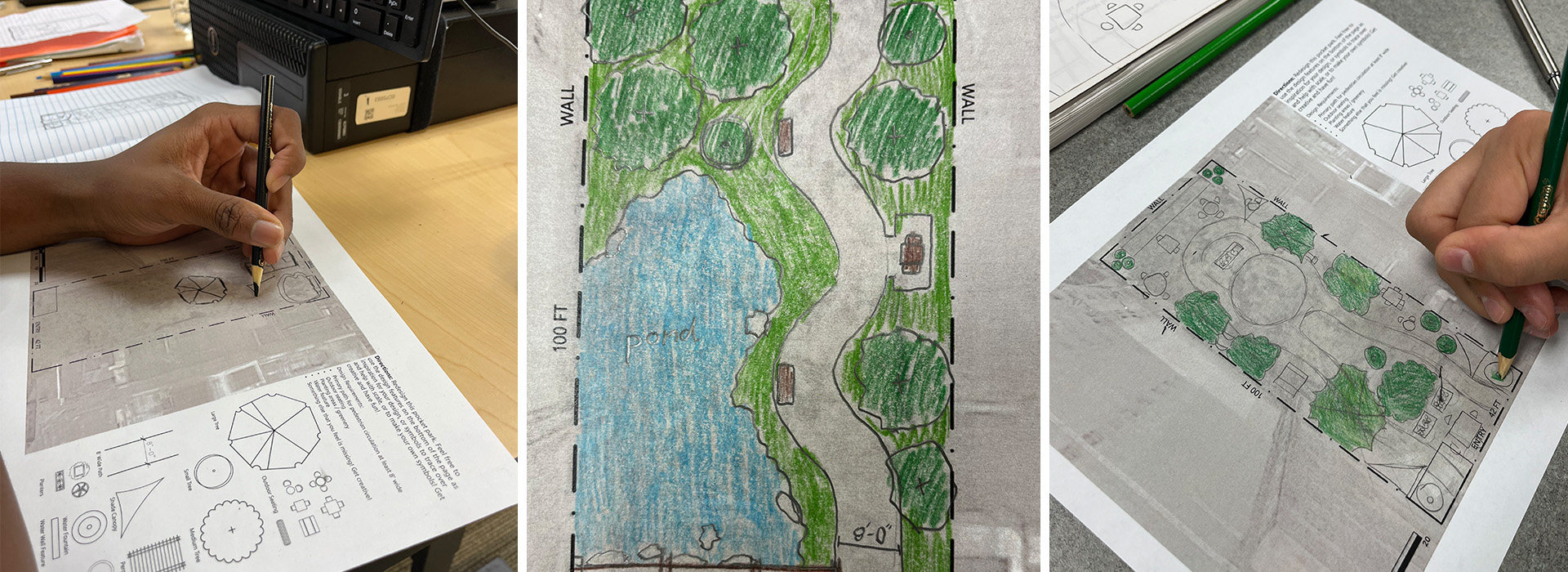
Examples of students’ pocket park design challenge. Students were instructed to redesign a pocket park in New York City. The client in the design challenge requested a green space designed to block out exterior city noise. Requirements included a primary pedestrian path, outdoor seating, planting areas and a water feature.
Janssen published the first part of her thesis research in ASLA’s professional practice blog, the Field. Janssen and her thesis advisor, Associate Dean of Academic Programs and Student Affairs Ashley Steffens, are working on developing her thesis research for publication in a peer-reviewed journal and continue to provide information and resources to ASLA. In November, Janssen successfully defended her MLA thesis.
“I’m proud to see CED students making an effort to reach future generations of landscape architects,” said Steffens. “Megan saw a gap in the current efforts to reach these students and has developed some excellent research on recruitment initiatives and their impact on student awareness of landscape architecture, which ultimately will benefit the profession.”


